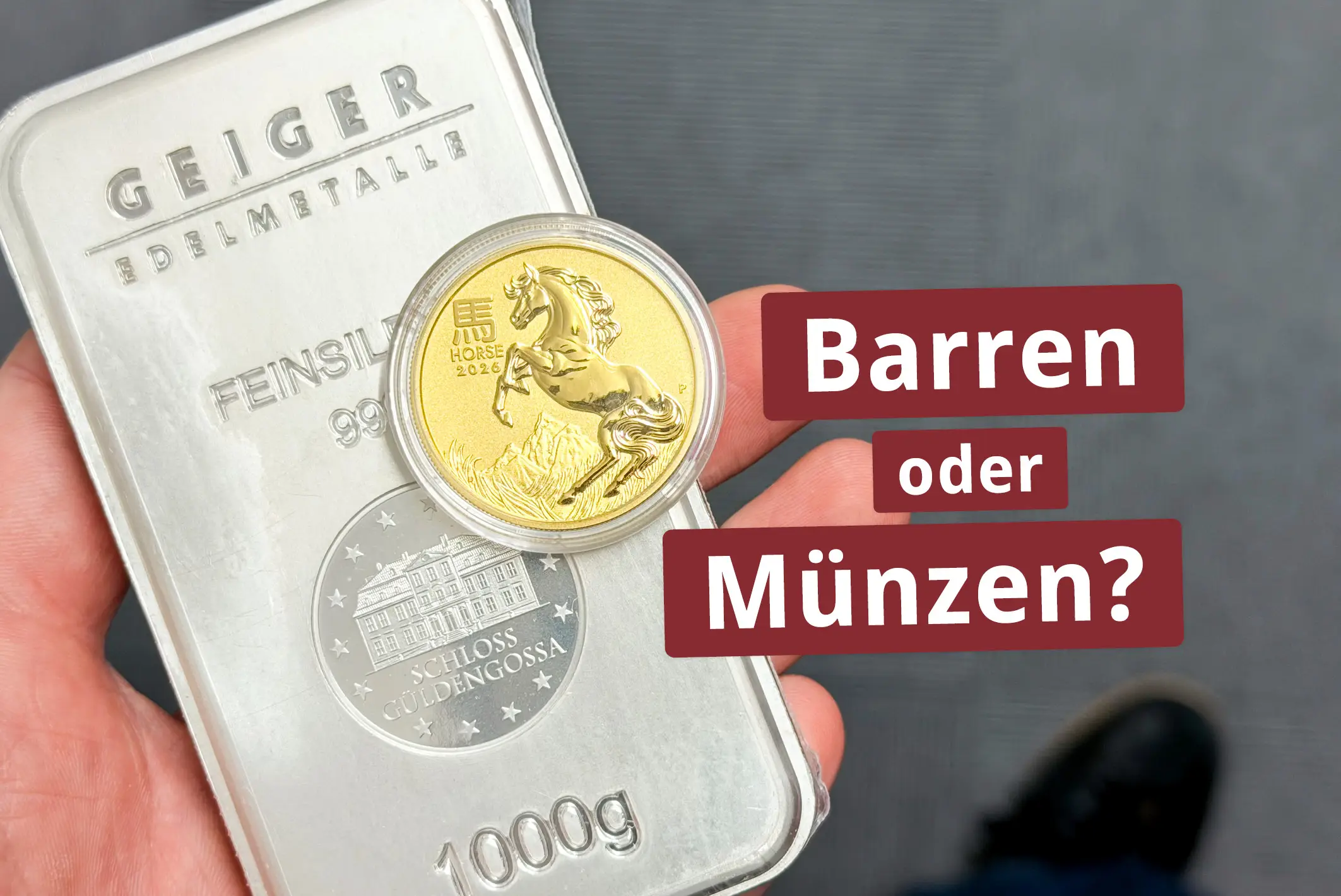
Should I buy bars or coins?
Anyone wishing to invest in physical precious metals such as gold or silver faces a key question: should they buy bars or coins?
Both options involve direct ownership of physical gold or silver. The precious metal does not exist as a paper asset, certificate or digital promise, but is tangible and owned outright. Both bullion bars and investment coins therefore serve the same basic purpose.
The key difference between bars and coins lies not in the metal itself, but in their pricing structure, flexibility, denomination and intended use.
Bars: Focus on efficiency and metal content
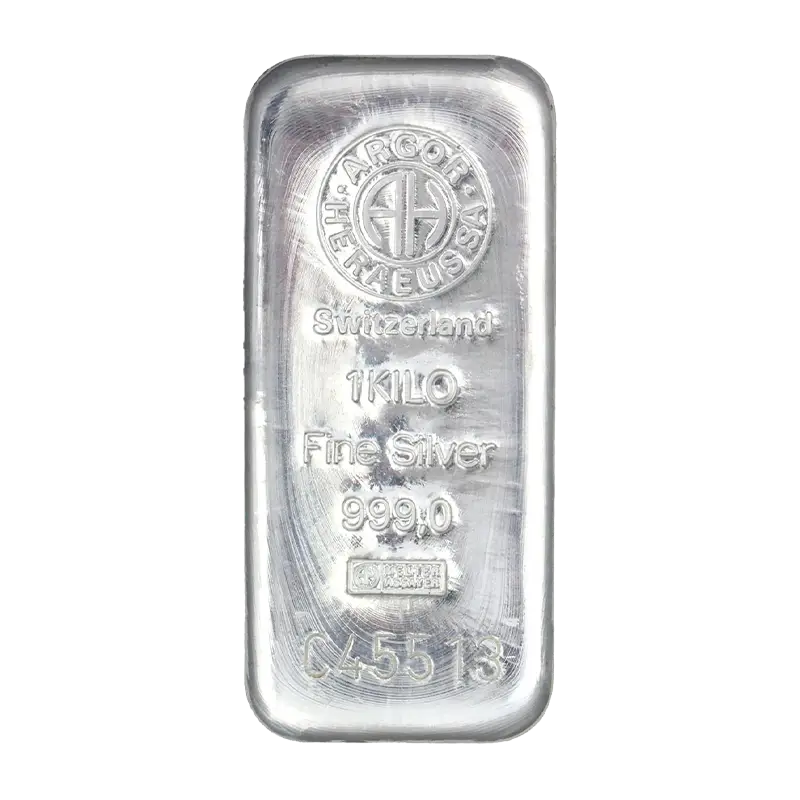
Precious metal bars are usually made of high-purity gold or silver with a fineness of 999 or 999.9. They bear a clear stamp indicating their weight, fineness and the manufacturer’s details.
Their main advantage lies in their cost-effectiveness. Compared to coins, they are simpler to produce, as there is no need for intricate motifs or designs that change annually. Investors generally receive more pure precious metal per unit of capital invested.
Bars are available in a wide range of sizes, from 1-gram bars and standard sizes right through to 1-kilogram bars and larger units. This variety allows for tailored solutions to suit different investment amounts and wealth-building strategies.
Bars are particularly suitable when:
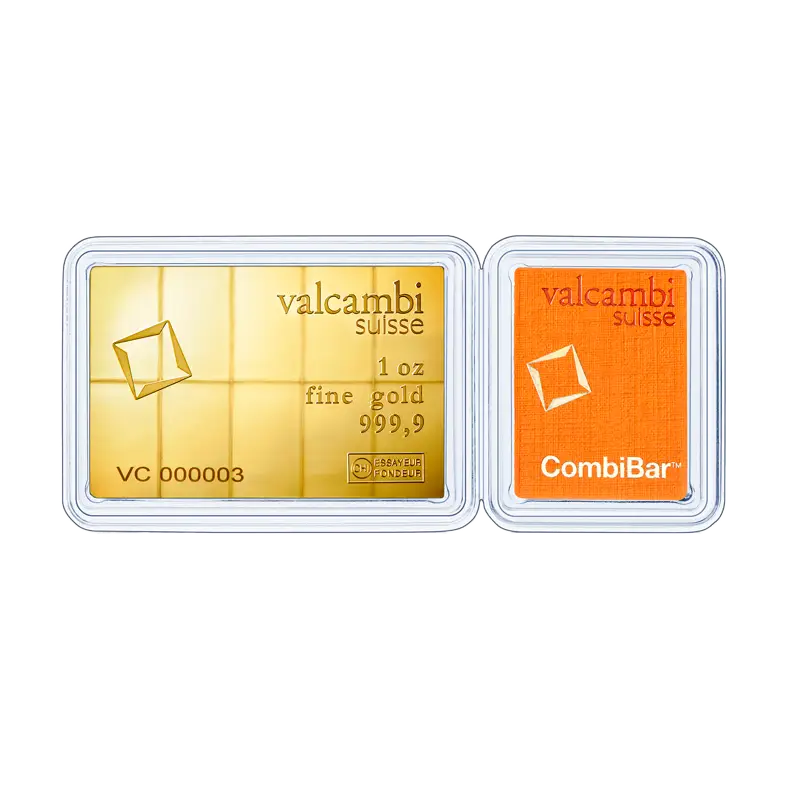
However, the denomination must be taken into account: a larger bar can only be sold as a whole. Those who wish to retain greater flexibility when selling at a later date should opt for several smaller units or so-called bar panels, which can be split along predetermined break lines.
Coins: flexibility and high market acceptance
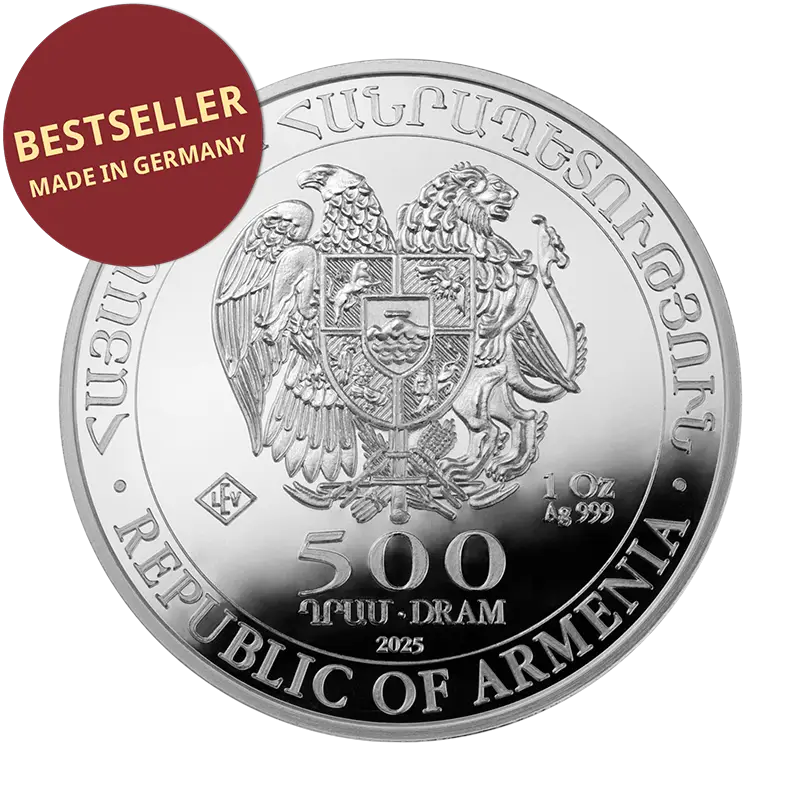
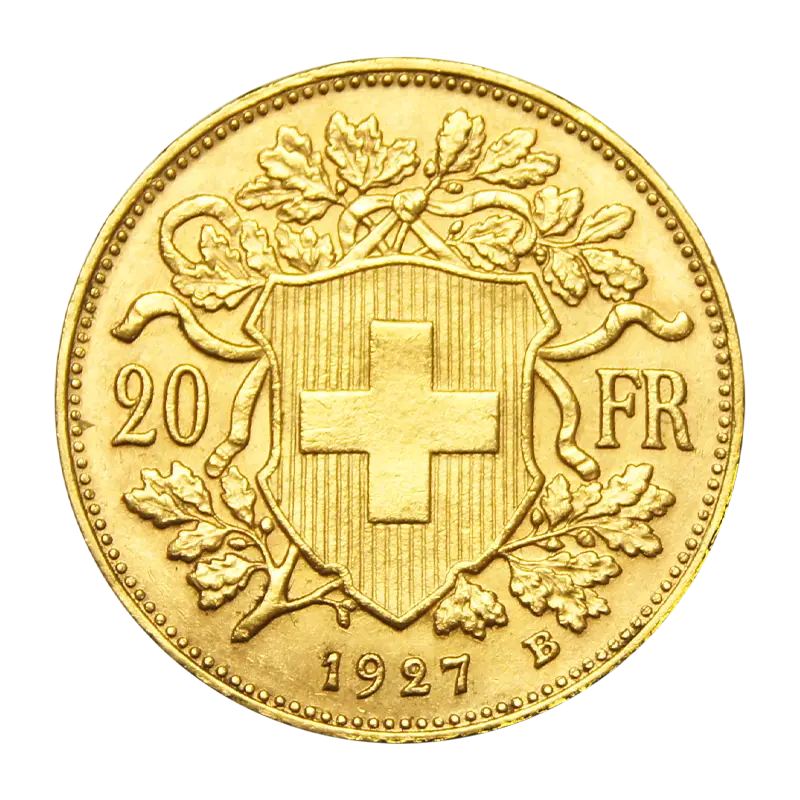
Classic bullion coins such as the Krugerrand, Maple Leaf and Vienna Philharmonic are well-established and recognised worldwide. This high profile ensures widespread market acceptance and makes it considerably easier to sell them on at a later date.
Whilst bars are more focused on cost-effectiveness, coins offer greater flexibility in terms of denomination. They are usually minted in one-ounce denominations, but are also available in smaller denominations such as 1/2, 1/4 or 1/10 ounce. This means that individual units can be sold separately if required.
Coins are particularly suitable when:
- Flexibility is the priority
- smaller amounts should be invested regularly
- high brand recognition is desired
Their international tradability and standardised minting make popular investment coins a tried-and-tested means of long-term wealth preservation for many investors.
Special editions and collector's value
In addition to standard coins, there are limited-edition special issues and collector’s editions. These can acquire a collector’s value in addition to their intrinsic metal value.
Unlike standardised investment products, however, this added value depends more heavily on demand, rarity and market sentiment. It is less predictable and therefore more speculative than the pure precious metal value.
For beginners, the focus is usually on a transparent investment in the metal value. In this case, common investment coins or classic bars in standard sizes are the most practical and straightforward choice.
Conclusion: Bars and coins serve the same basic purpose: building and maintaining a physical precious metals portfolio. What matters most, therefore, is not so much the physical form as the appropriate denomination, the individual’s investment strategy and the intended use. In practice, a combination of bars and bullion coins can combine stability with flexibility, thereby creating a balanced structure within a precious metals portfolio.